



Pet grooming · UAE
Dubai Pet Groomer
4,679
repeat visits tracked
4,876
new visits tracked
AED 116,804.72
loyalty revenue recorded
12-month dashboard view, 24 Aug 2025 to 23 Aug 2026
Use case
A first visit is expensive to win and easy to lose. A customer can be perfectly happy and still not come back, because nothing pulled them back. A loyalty card in the customer's wallet is a structured reason to return: visible progress, a defined reward, and a channel to remind them.
We set it up. Your team runs it.
How it works
Nothing here is automatic. Each step is something the customer or your team does, and the dashboard records it.
01
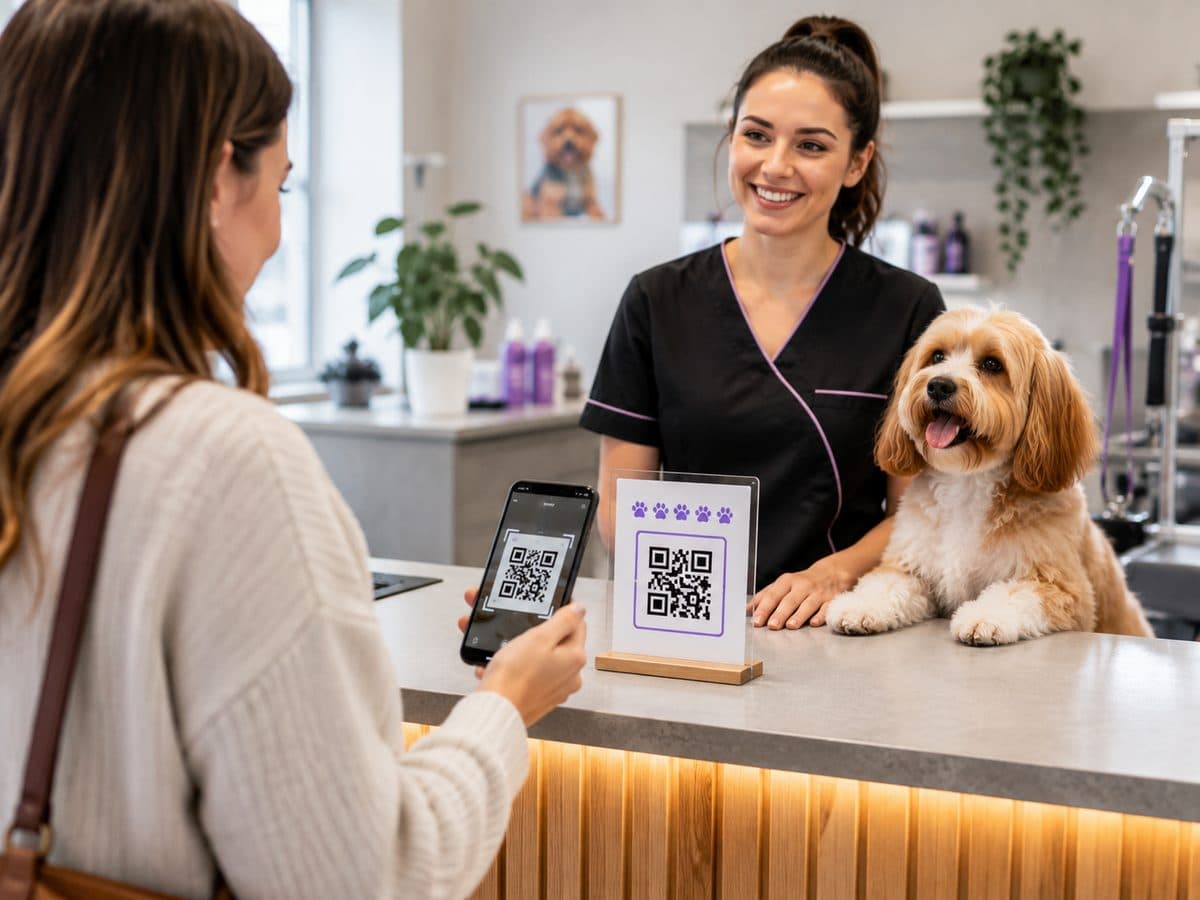
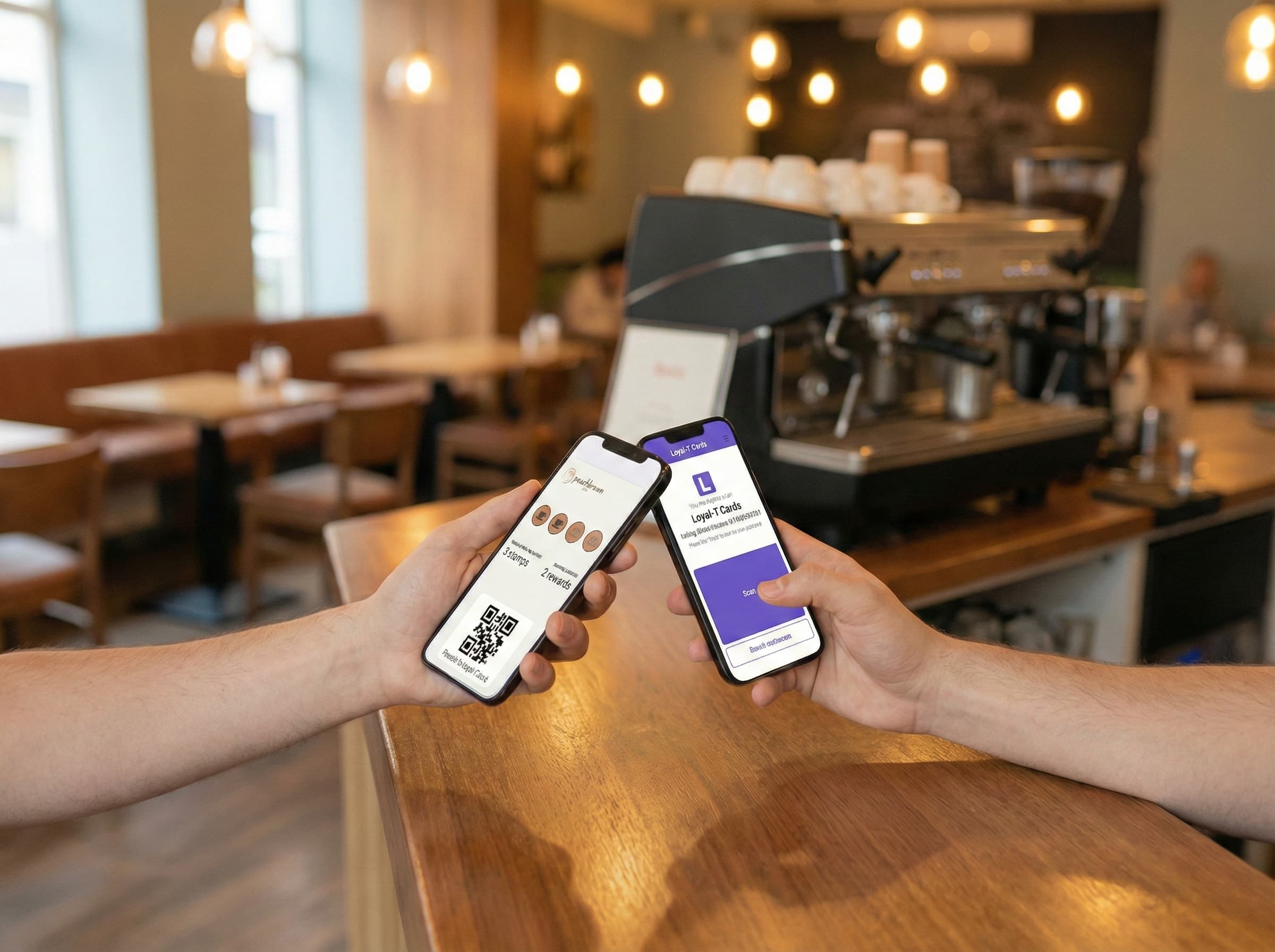
They scan your QR code at the counter or on the table and the branded card is added to Apple Wallet or Google Wallet. No app, no form.
02
It sits with their payment cards and passes, showing stamps, points or membership status. The progress is a reason to come back rather than try somewhere new.
03
Staff scan the card with the Loyal-T Cards scanner to record a visit or spend and to redeem the reward when it is earned.
04
Where configured, the platform can send a reward notification, an inactivity reminder, a birthday message or a campaign through the wallet card. Your team decides what to send.
The reward is the promise; the progress is the pull. A customer with six stamps toward a free tenth visit has invested in your program in a way that a customer with a paper card left at home has not. The wallet card keeps that investment visible without the customer having to remember anything.
The structure you choose shapes the behaviour. A stamp card rewards frequency. A rewards card with points rewards spend. A membership card rewards belonging. Loyal-T Cards configures the initial structure with you at setup, and you can adjust it as you learn what your customers respond to.
Because every recorded visit passes through the scanner, the dashboard separates new visits from repeat visits and records loyalty revenue and redemptions. That is the number most independent businesses have never had: how much of the trade is coming back.
It reports what your team recorded. It does not know about the customers who were not scanned, and it does not prove that a visit would not have happened without the card.
It will not fix a product or a service that customers did not enjoy. It will not record a visit nobody scanned. It will not reach a customer whose wallet settings block notifications. And it will not produce a predictable uplift figure: no honest supplier can promise that repeat visits rise by a set percentage, because the result depends on your reward, your counter and your customers.
What it does is make the reason to return visible and the result measurable. The two case studies below show what that looked like for two real businesses, reported exactly as their dashboards recorded it.
Loyalty formats
Every format is a configuration of the same annual plan. Loyal-T Cards configures the initial structure with you at setup.
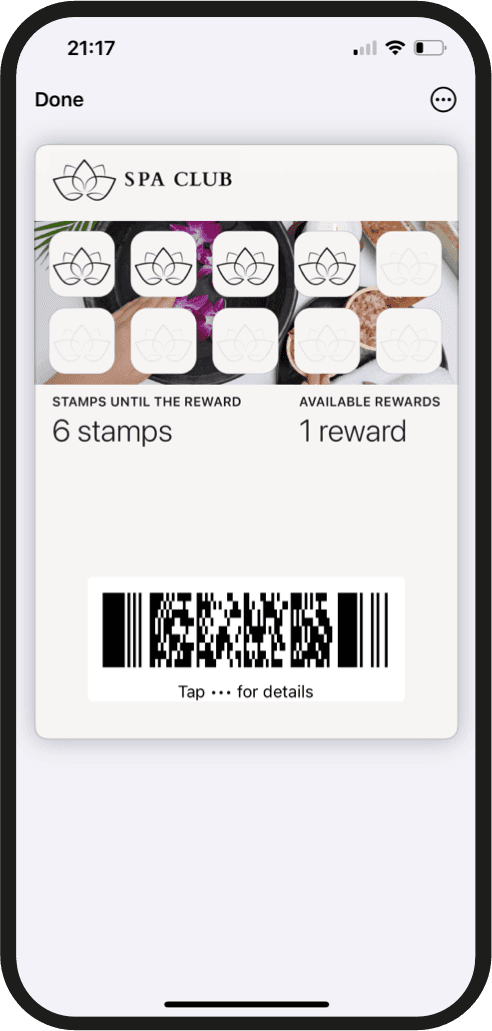
One stamp per eligible visit; the full card earns the reward. The simplest structure for frequency.
How the stamp card works →
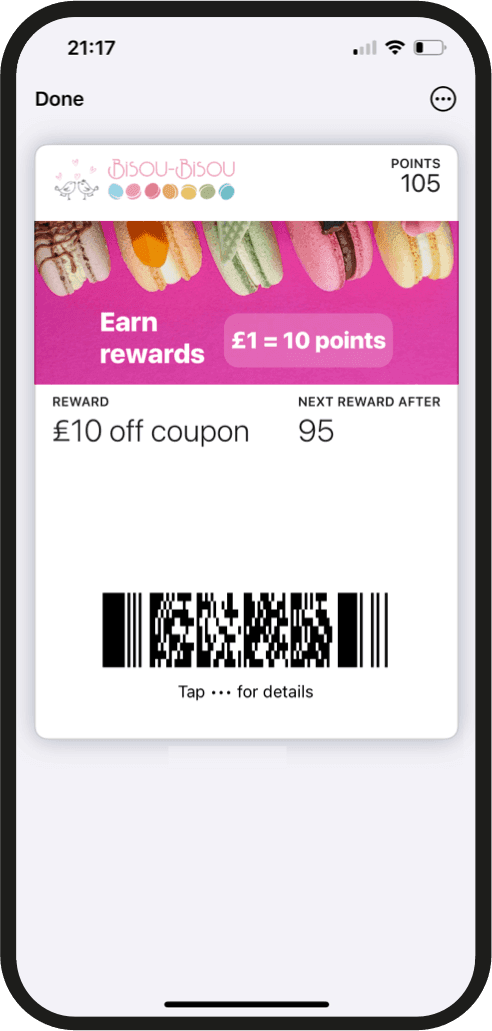
Points per amount spent, so bigger baskets earn more; several reward levels are possible.
How the rewards card works →
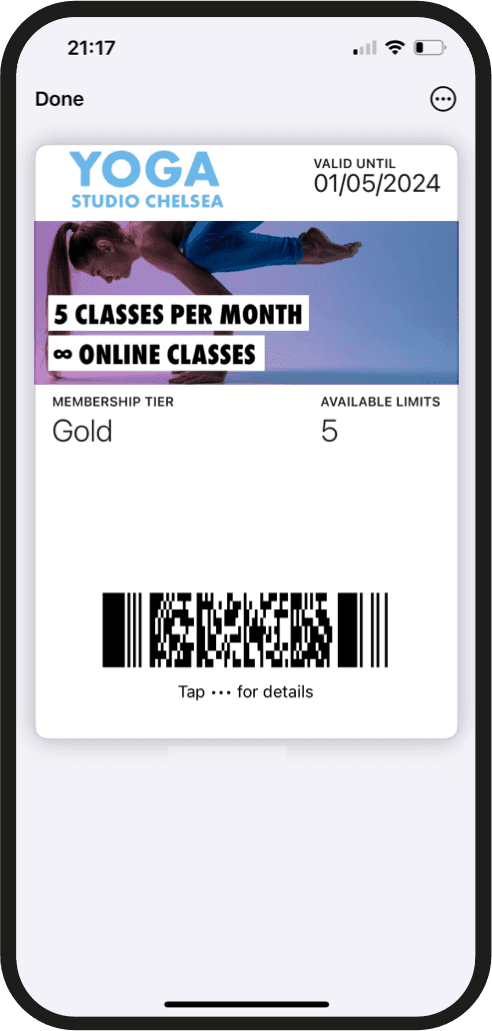
A standing member benefit shown on the card, for businesses where belonging matters more than counting.
How the membership card works →
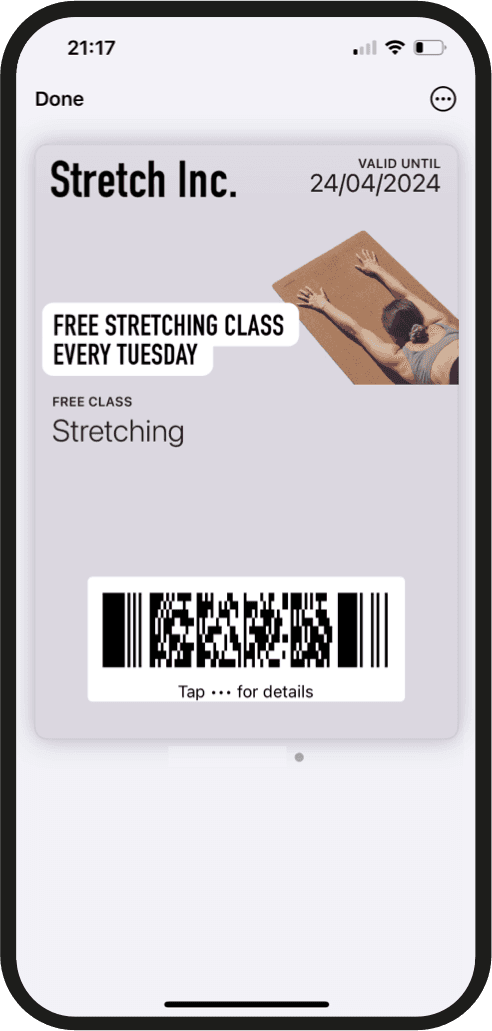
A return-visit offer with a visible expiry, redeemed by scanning the coupon.
How the coupon card works →
Industries
Real dashboard data
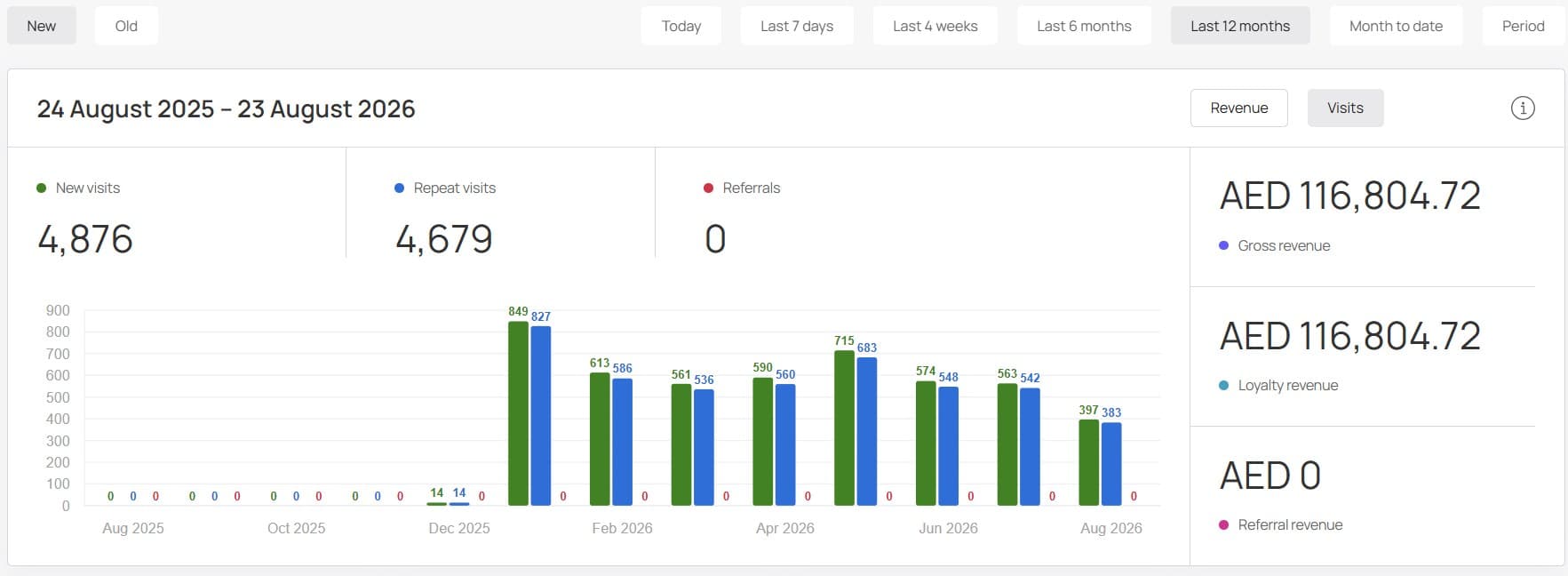
In a 12-month Loyal-T Cards dashboard view, one UAE pet-grooming business recorded 4,876 new visits and 4,679 repeat visits, and AED 116,804.72 in loyalty revenue. In the latest six months of that view, repeat visits (3,362) outnumbered new visits (958).
Pet grooming · UAE
4,679
repeat visits tracked
4,876
new visits tracked
AED 116,804.72
loyalty revenue recorded
12-month dashboard view, 24 Aug 2025 to 23 Aug 2026
These are that business's figures, reported as recorded. They show what the dashboard makes visible, not what another business will achieve.
Actual Loyal-T Cards customer dashboard data. Results vary. Figures describe activity recorded through the loyalty program and do not establish that Loyal-T Cards caused every visit or revenue amount.
More than one location? The standard Loyal-T Cards Annual plan includes one business location. Multi-location setups are available separately by agreement. A program that is meant to bring customers back to several branches is configured under that agreement.
Contact us about multiple locationsLoyal-T Cards pricing
US$660/year
Loyal-T Cards Annual: one business location, annual billing, platform setup, branded Apple Wallet and Google Wallet card, initial loyalty structure, QR materials and team onboarding included.
Founding 20First 20 businesses: US$330 for the first year, then US$660/year from year two.
Payment may be shown in your local currency at checkout.
Keep reading
Loyal-T Cards is a product of Affluenss Marketing Agency, based in Dubai, and is available to businesses internationally.
Use case
The pricing page shows the whole annual plan and what it includes. If you would rather ask a person first, WhatsApp us.
First 20 businesses: US$330 for the first year, then US$660/year. Payment may be shown in your local currency at checkout.