Compare
Apple Wallet stamp cards vs paper stamp cards: same mechanic, different delivery.
Ten stamps, one reward. The loyalty mechanic has not changed. What a digital wallet stamp card changes is the delivery: the card is on the customer's phone, the stamp is recorded by a scan, and the business can see the result.
The short answer
- Apple Wallet Stamp Cards vs Paper Stamp Cards
- A paper stamp card and a wallet stamp card run the same program. Choose paper if you want zero technology and your customers do not carry compatible phones. Choose a wallet stamp card if you want the card present at every visit, the stamps recorded rather than inked, and the ability to update the card or notify cardholders. Loyal-T Cards configures the wallet version for you.
Criteria
Paper stamp card vs Wallet stamp card, criterion by criterion.
| Criterion | Paper stamp card | Wallet stamp card (Loyal-T Cards) |
|---|---|---|
| The mechanic | Eligible visit earns a stamp; full card earns a reward | Identical: eligible visit earns a stamp; full card earns a reward |
| The card | Printed card with stamp boxes | Branded pass in Apple Wallet or Google Wallet showing stamps filled |
| Recording a stamp | Ink stamp or hole punch by staff | Staff scan the card with the Loyal-T Cards scanner |
| Seeing progress | Customer looks at the card, if they have it | Customer opens the wallet; the card shows current stamps |
| Reward redemption | Staff take the full card | Staff redeem through the scanner; the card resets or continues as configured |
| Customer needs | The card | A compatible smartphone |
| What the business learns | How many cards were handed out, roughly | New visits, repeat visits, stamps issued and rewards redeemed |
| Fraud resistance | A matching stamp marks any card | Only a staff scan records a stamp |
| Updating the program | Reprint | Update in the platform; the card refreshes on phones |
The mechanic
Paper stamp card
Eligible visit earns a stamp; full card earns a reward
Wallet stamp card (Loyal-T Cards)
Identical: eligible visit earns a stamp; full card earns a reward
The card
Paper stamp card
Printed card with stamp boxes
Wallet stamp card (Loyal-T Cards)
Branded pass in Apple Wallet or Google Wallet showing stamps filled
Recording a stamp
Paper stamp card
Ink stamp or hole punch by staff
Wallet stamp card (Loyal-T Cards)
Staff scan the card with the Loyal-T Cards scanner
Seeing progress
Paper stamp card
Customer looks at the card, if they have it
Wallet stamp card (Loyal-T Cards)
Customer opens the wallet; the card shows current stamps
Reward redemption
Paper stamp card
Staff take the full card
Wallet stamp card (Loyal-T Cards)
Staff redeem through the scanner; the card resets or continues as configured
Customer needs
Paper stamp card
The card
Wallet stamp card (Loyal-T Cards)
A compatible smartphone
What the business learns
Paper stamp card
How many cards were handed out, roughly
Wallet stamp card (Loyal-T Cards)
New visits, repeat visits, stamps issued and rewards redeemed
Fraud resistance
Paper stamp card
A matching stamp marks any card
Wallet stamp card (Loyal-T Cards)
Only a staff scan records a stamp
Updating the program
Paper stamp card
Reprint
Wallet stamp card (Loyal-T Cards)
Update in the platform; the card refreshes on phones
What does not change
The customer still earns one stamp per eligible visit or purchase and still receives a reward when the card is full. The threshold, the reward and the rules are yours to set in both cases. If your paper program works, the same structure moves across unchanged.
What the wallet changes for the customer
The card is on the phone the customer already carries, next to their payment cards and passes. They join by scanning a QR code once. They can see their progress whenever they open the wallet, and, where you configure it, receive a notification when a reward is ready.
Customers without a compatible phone cannot use a wallet card. For most counters that is a small minority, but it is a real one, and paper remains the answer for them.
What the wallet changes for the business
Every stamp is recorded because a team member scanned the card, so the dashboard shows how many visits were new, how many were repeat, and how many rewards were redeemed. That is information a paper card cannot give you, and it is the reason a business can tell whether its reward threshold is working.
It does not integrate with your till. Stamps are not created from sales automatically. The scan is a deliberate step, the same as inking a card.
Decision
Which one is right for your business?
Paper stamp cards may be enough if
- Your customers do not carry compatible smartphones
- You want no subscription and no technology
- You do not need visit or redemption data
A wallet stamp card may be the better fit if
- Lost and forgotten cards are costing you completed programs
- You want to know how much of your traffic is repeat business
- You want to update the card or notify cardholders without reprinting
- You want the card and structure prepared for you
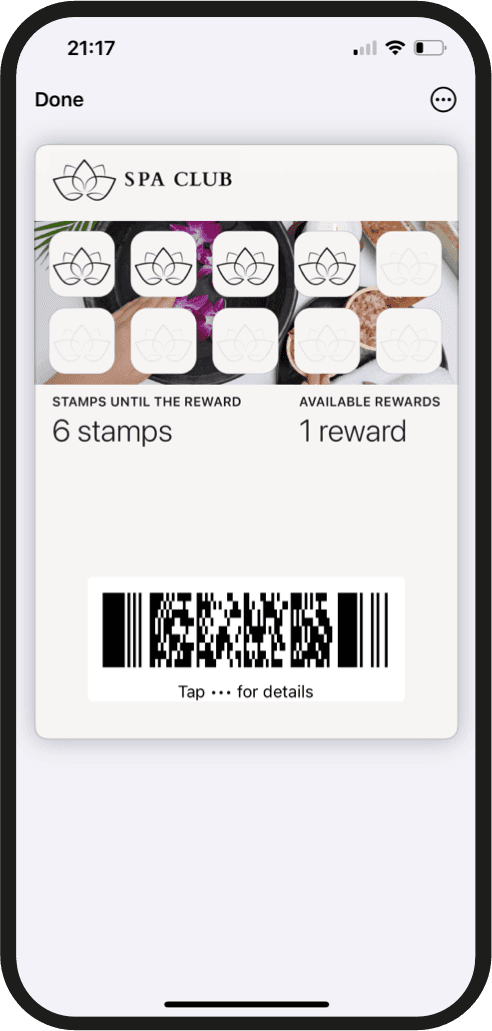
Stamp Card
A digital version of the paper punch card: eligible visits or purchases earn stamps, and a full card earns a defined reward.
Loyal-T Cards pricing
US$660/year
Loyal-T Cards Annual: one business location, annual billing, platform setup, branded Apple Wallet and Google Wallet card, initial loyalty structure, QR materials and team onboarding included.
Founding 20First 20 businesses: US$330 for the first year, then US$660/year from year two.
Payment may be shown in your local currency at checkout.
Common questions
Loyal-T Cards
We set it up. Your team runs it.
If a wallet loyalty card is the right model for your business, the pricing page shows the whole annual plan. If you would rather ask a person first, WhatsApp us.
First 20 businesses: US$330 for the first year, then US$660/year. Payment may be shown in your local currency at checkout.